
Law firm website design is the strategic combination of technical performance, authoritative content, and user-focused layout that converts visitors into paying clients. The American Bar Association's 2025 Legal Technology Survey found that 37% of legal clients find lawyers through online search, making Google the single largest client acquisition channel for attorneys. That number means your website is not a digital brochure. It is your most active business development tool. This guide covers the four pillars of effective legal website design: technical SEO, content strategy, local search, and conversion optimization.
What does good law firm website design actually require?
Effective attorney web design sits at the intersection of three disciplines: user experience, search engine optimization, and credible legal content. Most law practice websites fail on at least one of these. A site can look polished but load slowly, rank well but confuse visitors, or convert well locally but miss national long-tail traffic entirely. The firms that win online treat their websites as authority engines, not static pages updated once a year.
The industry term for this approach is "legal website design with E-E-A-T compliance," where E-E-A-T stands for Experience, Expertise, Authoritativeness, and Trustworthiness. Google uses these signals to evaluate whether a legal page deserves to rank. A site that meets E-E-A-T standards earns better rankings and more client trust simultaneously.

What are the technical SEO requirements for law firm websites?
Technical SEO is the foundation every other design decision rests on. A beautifully written practice area page means nothing if the page loads in four seconds on a phone.
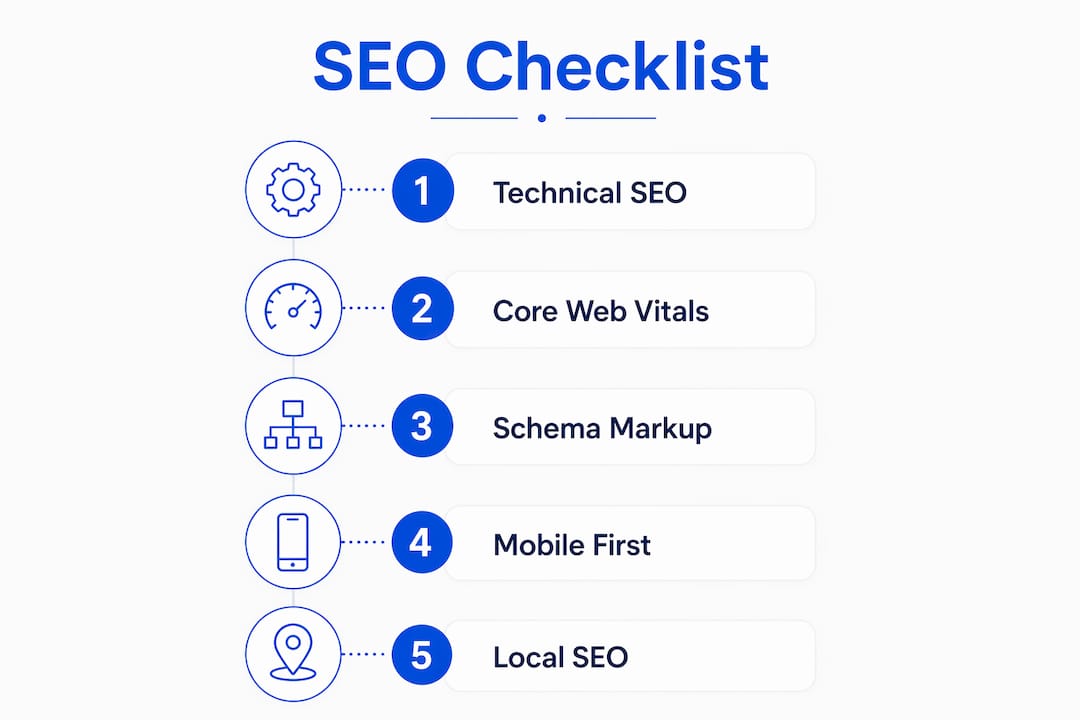
Core Web Vitals benchmarks
Law firm websites must achieve an LCP (Largest Contentful Paint) under 2.5 seconds, with an ideal target under 1.8 seconds, and keep total page weight under 2MB to meet 2026 Core Web Vitals standards. Missing these benchmarks pushes your pages down in rankings before a single visitor reads a word. INP (Interaction to Next Paint) should stay under 100ms, and CLS (Cumulative Layout Shift) should remain below 0.1 to prevent jarring visual jumps that frustrate mobile users.
Common performance killers
Most law firms suffer from slow page speeds caused by bloated JavaScript and multiple chat widgets running simultaneously. Each third-party script adds load time. A single chat widget, a cookie consent banner, and an analytics tag can collectively add over a second to your LCP. Run a full website audit to identify which scripts are dragging your score down before adding any new features.
Pro Tip: Defer non-critical JavaScript and lazy-load images below the fold. These two changes alone can cut LCP by 30–50% on most legal websites without touching your design.
Schema markup and mobile-first indexing
Schema markup tells Google exactly what your pages contain. Law firm websites should implement LegalService, Attorney, FAQPage, and BreadcrumbList schema types. These enable rich results in search, including star ratings, FAQ dropdowns, and breadcrumb navigation directly in the SERP. Over 60% of legal searches now occur on mobile devices, and Google uses mobile-first indexing, meaning it crawls and ranks your mobile version first. HTTPS is non-negotiable. Any law firm website still running on HTTP loses both rankings and client trust.
How should law firms structure content to rank and convert?
Content is where most attorney websites either build authority or waste budget. The goal is not to publish frequently. The goal is to publish pages that match exactly what a potential client types into Google.
E-E-A-T and attorney bylines
Every content page should carry an author byline linked to a detailed attorney bio that includes bar admissions, notable cases, and years of practice. Google evaluates legal content under "Your Money or Your Life" (YMYL) guidelines, which apply strict quality standards to pages that could affect a reader's legal situation. A generic "Staff Writer" byline on a personal injury page signals low authority. A named attorney with verifiable credentials signals the opposite.
Building content silos by practice area
Building content silos around specific practice areas improves topical authority and matches client search behavior far better than chasing broad keywords. A family law firm should not have one page titled "Family Law." It should have separate pages for divorce, child custody, spousal support, adoption, and protective orders, each internally linked to a central pillar page. This architecture tells Google you are the definitive resource on family law in your market.
Pro Tip: Before writing a new page, search the target keyword in an incognito window. If Google returns blog posts, write a blog post. If it returns service pages, write a service page. Matching search intent is the single fastest way to improve rankings without changing a word of your existing content.
Here is what every practice area content silo needs:
- A pillar page covering the broad practice area with internal links to subtopics
- Individual subtopic pages targeting specific long-tail queries
- An FAQ section on each page targeting featured snippet positions
- Attorney bylines with credentials linked to full bio pages
- Case results or client testimonials specific to that practice area
How does local SEO affect client acquisition for law firms?
Local SEO determines whether your firm appears when someone in your city searches "personal injury attorney near me." That placement is worth more than most paid advertising.
The Google local map pack
The Google local map pack captures 42% of clicks for local-intent queries. That is nearly half of all clicks going to just three listings. Firms outside the map pack are competing for the remaining traffic below the fold. Getting into the map pack requires a fully optimized Google Business Profile, consistent NAP (Name, Address, Phone) data across the web, and genuine client reviews.
Optimizing your Google Business Profile
Google Business Profile optimization with specific categories, photos, reviews, and service areas is the most direct lever for local map pack rankings. Follow these steps to maximize your profile:
- Select your primary category precisely. "Personal Injury Attorney" outperforms "Law Firm" for injury-related searches.
- Add at least 10 photos including office exterior, interior, and attorney headshots.
- Complete the Q&A section with your own questions and answers before clients ask.
- List every service area, not just your city, to capture surrounding county searches.
- Respond to every review, positive or negative, within 48 hours.
Pro Tip: Post a Google Business Profile update every two weeks. Consistent activity signals to Google that your profile is actively managed, which correlates with higher local pack rankings.
For a deeper look at profile management, Forge-web-studio's Google Business optimization service covers the full setup and ongoing management process.
Location pages and citation building
Create individual location pages for each city or county you serve. Each page should reference local courts, relevant state statutes, and specific geographic details that prove genuine local presence. Build citations on legal directories like Avvo, Justia, and FindLaw, and verify that your NAP data matches exactly across every listing. A single inconsistency in your phone number format can dilute local ranking signals. Forge-web-studio's local SEO guide explains citation building in detail for service-area businesses.
What conversion strategies turn law firm website visitors into clients?
Traffic without conversions is just a vanity metric. The best website design for lawyers prioritizes clear paths to contact from the first second a visitor lands on the page.
Forms, calls, and live chat
Keep consultation forms above the fold and limit fields to three: name, phone number, and a brief description of the legal issue. Every additional field reduces submission rates. Live chat implementation on law firm websites increases lead volume by an average of 30%. That figure reflects a simple reality: many potential clients will not call but will type a quick question. Click-to-call buttons should appear in the header and at the bottom of every mobile page, where thumbs naturally rest.
Trust signals that close the gap
Visitors to a law firm website are often in a stressful situation. They need to trust you before they contact you. Place these trust signals prominently:
- Attorney headshots with professional photography, not stock images
- Bar admission details and state license numbers
- Awards, Super Lawyers ratings, and Martindale-Hubbell peer review badges
- Client testimonials with first names and case types
- SSL security badge and privacy policy link in the footer
Pro Tip: Add a short video introduction from the lead attorney on your homepage. Video builds personal connection faster than any written bio and keeps visitors on the page longer, which improves your average session duration signal.
Mobile usability for legal clients
Google prioritizes mobile-first indexing, and the majority of legal searches happen on phones. Buttons must be large enough to tap without zooming. Text must be readable at default font size. Forms must not require horizontal scrolling. A slow website on mobile does not just hurt rankings. It signals to a stressed potential client that your firm does not pay attention to details.
Key Takeaways
Effective law firm website design requires technical performance, E-E-A-T content, local SEO, and clear conversion paths working together as a single system.
| Point | Details |
|---|---|
| Core Web Vitals are non-negotiable | Achieve LCP under 2.5s and keep page weight under 2MB to meet 2026 ranking standards. |
| Content silos beat broad pages | Build practice area pillar pages with linked subtopics to demonstrate topical authority. |
| Local map pack drives half of clicks | Optimize your Google Business Profile with photos, reviews, and precise service categories. |
| Live chat increases leads by 30% | Add live chat alongside click-to-call buttons to capture clients who will not call directly. |
| Trust signals reduce friction | Attorney headshots, bar admissions, and client testimonials convert hesitant visitors into contacts. |
Why most law firm websites are built backwards
I have reviewed hundreds of legal websites, and the pattern is almost always the same. The firm spent money on a good-looking design, then handed it to a developer who knew nothing about legal SEO, and the result is a site that ranks for the firm's own name and nothing else.
The biggest mistake I see is treating technical SEO as an afterthought. Attorneys will spend weeks perfecting the copy on a practice area page, then launch it on a platform that scores a 45 on Google PageSpeed Insights. The content never gets a fair chance because Google cannot crawl it efficiently on mobile.
The second mistake is ignoring local content specificity. A Dallas personal injury attorney who writes generic content about "Texas car accident laws" competes with every firm in the state. The same attorney who writes about "filing a claim after an accident on I-35 in Dallas County" competes with almost no one. Specificity is a competitive advantage that most firms leave on the table.
The future of legal website design belongs to firms that treat their site as a living publication, not a static credential. Attorney expertise needs to show up in bylines, in detailed case result pages, and in FAQ content that answers the exact questions clients type at midnight. The firms building that kind of authority now will own their local markets for years.
— Dylan
Forge-web-studio builds law firm websites that rank and convert
Law firms need websites that perform under real conditions: fast on mobile, visible in local search, and clear enough to convert a stressed visitor in under ten seconds.
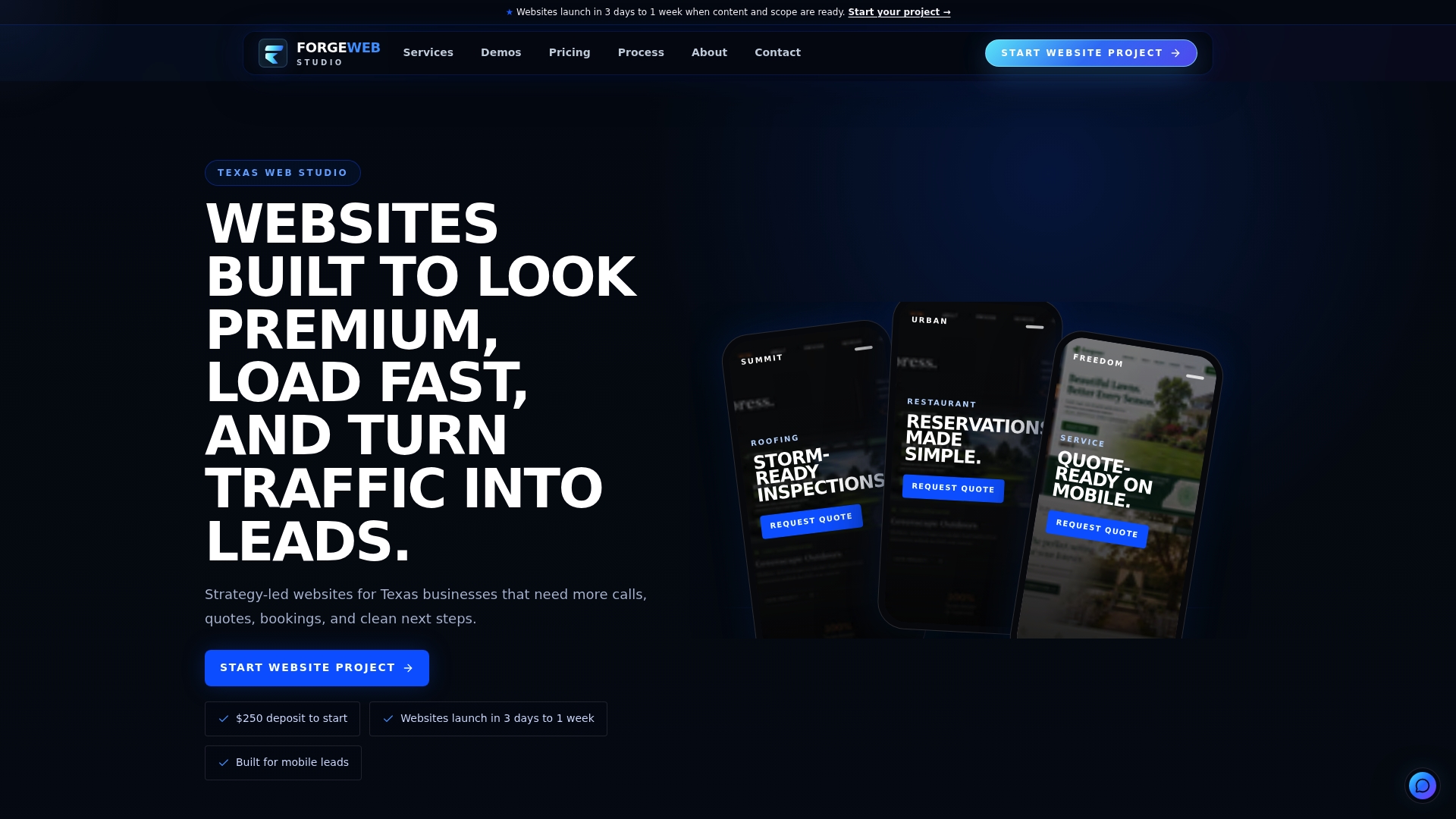
Forge-web-studio builds responsive websites for lawyers with technical SEO, local search optimization, and conversion-focused design built in from day one, not bolted on later. Every site launches with Core Web Vitals compliance, schema markup, and mobile-first architecture. If your current site is losing clients to slower competitors with better-optimized pages, a full web design consultation is the fastest way to find out exactly what needs to change and how quickly it can be fixed.
FAQ
What is law firm website design?
Law firm website design is the process of building a legal practice website that combines technical SEO, E-E-A-T content, and conversion-focused layout to attract and retain clients. It goes beyond aesthetics to include performance, local search visibility, and trust signals.
How fast does a law firm website need to load?
Law firm websites should achieve an LCP under 2.5 seconds, with an ideal target of under 1.8 seconds, to meet 2026 Core Web Vitals standards and maintain competitive search rankings.
Why does local SEO matter for attorneys?
The Google local map pack captures 42% of clicks for local-intent searches. Attorneys who rank in the map pack through Google Business Profile optimization and local citations capture nearly half of all available local traffic.
How many form fields should a law firm contact form have?
Limit consultation forms to three fields: name, phone number, and a brief description of the legal issue. Each additional field reduces submission rates and costs you potential clients.
What schema markup should a law firm website use?
Law firm websites should implement LegalService, Attorney, FAQPage, and BreadcrumbList schema types. These enable rich results in Google search, including FAQ dropdowns and star ratings that increase click-through rates.