If you only do two things for restaurant local SEO, claim and fully optimize your Google Business Profile, then publish a crawlable, mobile-friendly menu. Everything else compounds from there. In the next 48 to 72 hours, you can verify your Google Business Profile, replace a PDF menu with an HTML version, and fix your single worst mobile speed issue.
- Verify your Google Business Profile and complete every field
- Publish a real HTML menu instead of a PDF
- Fix one major mobile speed blocker (usually image size)
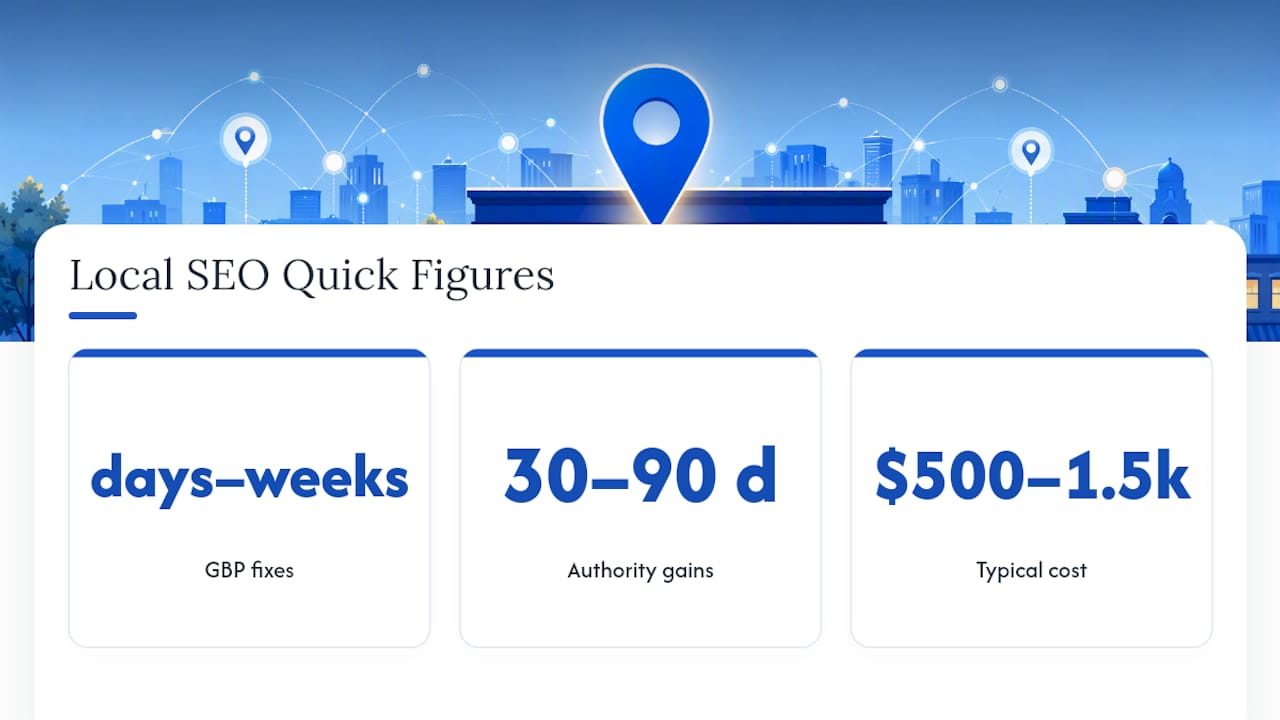
Quick stat: Restaurants that fix Google Business Profile completeness, NAP mismatches, and PDF menus in the same sprint tend to see the fastest movement into the Local Pack. GBP fixes often show up within days; authority gains from reviews and backlinks take closer to 30 to 90 days.
Key Takeaways
Restaurant local SEO works when Google Business Profile completeness, a crawlable HTML menu, and mobile page speed are fixed together, not one at a time.
| Point | Details |
|---|---|
| Start with GBP | Verify your listing, pick the most specific category, and set Order or Reserve as the primary button. |
| Kill the PDF menu | Rebuild it in HTML with Restaurant and MenuItem schema so dishes are searchable. |
| Fix speed first | Target Largest Contentful Paint under 2.5 seconds with image compression and caching. |
| Respond to reviews fast | Reply within 48 hours to lift both profile clicks and conversion. |
| Consider a specialist build | Forge-web-studio delivers mobile-first sites with local SEO built in, often within a week. |
Table of Contents
- What Drives Restaurant Local SEO Results?
- How Do You Optimize Google Business Profile for a Restaurant?
- Why Does Your Website's Technical Setup Matter for Local Rankings?
- Do Reviews Really Affect Local Search Rankings?
- What Local Keywords Should a Restaurant Target?
- How Do You Fix Inconsistent Restaurant Listings?
- Which Metrics Should You Track for Restaurant SEO?
- Forge-web-studio's Take on Restaurant Local SEO
- Ready to Fix Your Restaurant's Local SEO?
- Frequently Asked Questions
- Sources
What Drives Restaurant Local SEO Results?
Restaurant local SEO for restaurants comes down to three pillars, and confusing them is why so many owners waste effort polishing the wrong thing. Get the order right and the rest of your local search optimization gets a lot easier.
- Local profiles — your Google Business Profile and directory listings determine whether you show up at all when someone searches "tacos near me."
- On-page and site signals — your menu structure, page speed, and schema markup determine whether Google trusts what it finds once it clicks through.
- Authority — reviews and local backlinks determine whether you outrank the restaurant two blocks over with a nearly identical menu.
For a small team with limited hours, work the pillars in that order. A gorgeous website with zero GBP activity is invisible; a perfect GBP listing pointing to a slow, PDF-only site converts poorly once people arrive.
Pro Tip: Don't split effort evenly across all three pillars in week one. Fix discovery first (GBP), then eligibility (site), then prominence (reviews and links). Sequencing beats spreading yourself thin.
How Do You Optimize Google Business Profile for a Restaurant?
Your Google Business Profile is not a directory listing. Treat it like a storefront: the goal is clicks that turn into calls, orders, and reservations, not just impressions.
- Claim and verify the listing through Google's video, phone, or postcard verification. Postcard verification is the most common failure point since it takes 5 to 14 days and gets lost if your mailbox isn't checked daily.
- Choose the most specific primary category available ("Italian Restaurant" beats "Restaurant"), then add secondary categories for delivery, catering, or bar service if they apply.
- Fill in every field: menu, regular hours, holiday hours, attributes (outdoor seating, kid-friendly, wheelchair accessible), and photos of food, not just the storefront.
- Set your primary CTA button to Order or Reserve rather than a generic website link, and check monthly that it still points to a working page.
Google's own guidance backs this up: verifying your profile, keeping information current, responding to reviews, and adding fresh photos are the levers Google names directly for improving local ranking. Post weekly updates (a new dish, a weekend special) and respond to every review within 48 hours. A Google Business Profile optimization service can handle this maintenance if your team doesn't have the bandwidth for weekly upkeep.
Why Does Your Website's Technical Setup Matter for Local Rankings?
A PDF menu is nearly invisible to search engines and unreadable to voice assistants. An HTML menu built with Schema lets Google and AI assistants surface individual dishes for searches like "best tacos near me," which a scanned PDF simply cannot do.
- Structure each dish as its own HTML element with name, price, and description, not an embedded image
- Target Largest Contentful Paint under 2.5 seconds. Compress hero images, defer non-critical JavaScript, and enable server caching
- Put your neighborhood name in the title tag, meta description, and an address block near the top of the page
- Embed a Google Map and keep your order/reservation button visible without scrolling
Fast fact: a handful of targeted speed fixes, rather than a full rebuild, often improves Largest Contentful Paint enough to cut bounce rate. For a holiday menu or one-off promotion, a lightweight landing page is often faster to launch and easier to keep fast than editing your full site.
Do Reviews Really Affect Local Search Rankings?
Recent reviews signal to Google that a business is active, and to diners that it's worth the drive. Restaurants that respond to reviews within 48 hours see higher profile clicks and better conversion than those that let feedback sit unanswered.
- Put a QR code on receipts and table tents linking straight to your review page
- Send a short SMS or email 2 hours after a reservation or pickup order asking for feedback
- Respond to every review, good or bad, within 48 hours using a specific detail from the visit
- Pull your strongest recent reviews into GBP posts and on-site testimonials
Pro Tip: Never copy-paste the same reply. A generic "Thanks for visiting!" reads as automated. Reference the dish or server by name when you can.
What Local Keywords Should a Restaurant Target?
The winning formula is dish or cuisine plus city or neighborhood: "brunch in East Austin" beats "best brunch" every time on intent match. Layer in experience-based searches too, like "romantic dinner near [landmark]" or "patio dining downtown."
- Place these phrases naturally in title tags, meta descriptions, H1/H2 headings, and menu item descriptions
- Use your GBP description field for the same phrases, written for humans first
- Build a dedicated neighborhood page only if you have a second location or delivery zone; otherwise enhance your existing homepage and menu pages
- Check Google Search Console monthly for queries you already rank for on page two. Those are your fastest wins to push into the Local Pack
How Do You Fix Inconsistent Restaurant Listings?
Search your restaurant's name across Google, Yelp, TripAdvisor, Apple Maps, and every delivery platform you use. Any mismatch in name, address, or phone number (NAP) dilutes the trust signal Google uses to rank you.
- Audit Yelp, TripAdvisor, Apple Maps, DoorDash, Uber Eats, and Grubhub first, plus ensure consistent information on local directories like those listed on Southern California local business sites. These carry the most local weight
- Update the source listing, not just Google. Third-party aggregators often pull stale data for months
- Delivery platform listings count as citations, so treat menu and hours updates there with the same priority as your website
- Fix NAP mismatches across your top five directories
- Ask two or three local partners (a nearby brewery, a food blogger, an event organizer) for a mention or link
- Expect the first citation and link fixes to show measurable Local Pack movement within 30 to 60 days
A local backlink and authority system built for Texas businesses can speed this up if outreach isn't something your team has time for.
Which Metrics Should You Track for Restaurant SEO?
Track calls, direction requests, and reservation/order clicks from GBP Insights weekly. These map directly to revenue, unlike raw impressions.
- Check GBP Insights and review counts weekly
- Run a deeper technical and citation audit monthly, and a full competitive audit quarterly
- Use Google Search Console for keyword gaps and Analytics for on-site conversion tracking
- If you haven't touched your listings in three months or don't know your current review count, that's your signal to bring in help
| Metric | Tool | Check Frequency |
|---|---|---|
| GBP views, clicks, calls | Google Business Profile Insights | Weekly |
| Direction requests, reservations | GBP Insights + booking platform data | Weekly |
| Keyword rankings, search queries | Google Search Console | Monthly |
| Review velocity and rating trend | Review aggregators / GBP | Weekly |
| Site speed and Core Web Vitals | Website audit checklist | Quarterly |
A restaurant that pairs mobile-friendly ordering flows with owned booking channels recaptures margin that would otherwise go to third-party marketplaces, which is worth tracking alongside your SEO numbers.
Forge-web-studio's Take on Restaurant Local SEO
Most restaurant websites we look at fail on the boring stuff: a PDF menu, a five-second load time, a GBP listing nobody has touched since opening week. Forge-web-studio builds mobile-first sites with local SEO baked in from day one, not bolted on after launch, because retrofitting schema and speed fixes onto a slow site costs more than building it right the first time.
DIY works fine if you can commit an hour a week to GBP posts, review responses, and citation checks. The moment that hour disappears for a month, rankings slide, and by the time you notice, a competitor has taken your spot in the Local Pack.
Ready to Fix Your Restaurant's Local SEO?
There's a real cost to doing this piecemeal: a slow site undercuts a great GBP listing, and a great site with a stale GBP profile never gets found in the first place. Forge-web-studio builds both pieces together from the start, which means no gap between what shows up in search and what happens when someone actually lands on your page.
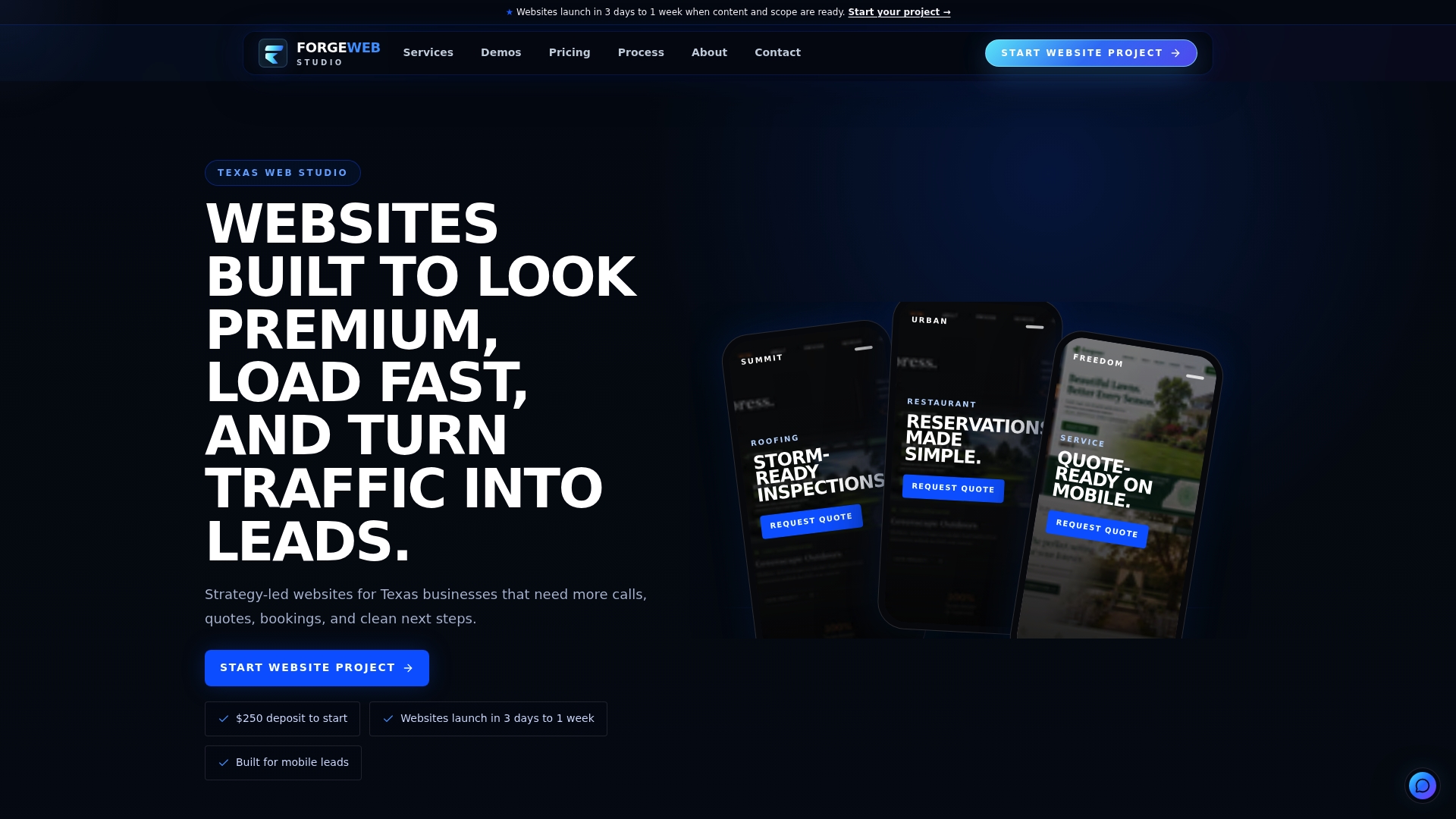
Our restaurant projects typically include GBP claim and optimization, a fast mobile-first site with a real HTML menu and schema markup, and the technical speed fixes covered above, often delivered in as little as 3 days to a week rather than the months a typical agency build takes. If your current site was built years ago or your GBP listing hasn't been touched recently, start with a responsive website build or get your listing fixed through our local SEO service and see what changes in your Local Pack position within 60 days.
Frequently Asked Questions
How long does restaurant local SEO take to show results? GBP fixes like verification and menu updates can shift Local Pack visibility within days to a couple of weeks. Authority-driven gains from reviews and backlinks typically take 30 to 90 days to compound.
What does local SEO for restaurants cost? Small restaurants commonly budget $500 to $1,500 per month for ongoing local SEO services, with full-service retainers running higher depending on scope and market competition.
Do I need a blog for restaurant local SEO? Not strictly, but localized content like event recaps, seasonal menu posts, or neighborhood guides gives you more pages to rank for dish and neighborhood searches, and it gives you fresh material to share on social platforms and in GBP posts.
Does voice search change how I should optimize? Yes. Voice queries tend to be conversational ("where's a good taco place open now"), so structured data and complete GBP hours matter more, since assistants pull answers directly from that structured information rather than crawling your full site.
Should I list my restaurant on every directory I can find? No. Prioritize the platforms that carry real weight, like Yelp, TripAdvisor, Apple Maps, and your delivery apps, and keep those listings consistent rather than chasing every low-authority directory site.
Sources
- Tips to improve your local ranking on Google
- Schema
- Restaurant SEO: The 2026 Guide to Ranking #1
- Digital Marketing for Restaurants