
Content-first design means writing and testing the words, flows, and messages a product needs before drawing any screens, so structure grows out of what users actually need to know. The main payoff is fewer redesign cycles: when content is validated early, teams stop reshaping layouts around copy that was never tested. Choose this approach for new products, complex flows, or forms; lighter, incremental content edits are enough for pages that already work.
TL;DR:
- Content-first design reduces costly redesigns by validating messaging and flow early through testing with real users, rather than relying on assumptions.
- Creating a content prototype as a simple, text-based conversation script helps identify confusing language and structural issues before interface design begins.
- Involving UX writers during goal-setting and maintaining sign-off on content ensures consistency and alignment with user needs throughout development.
- Ensuring logical heading hierarchy and focus order during early content writing supports accessibility and compliance with WCAG standards.
- Starting with small, focused content prototypes and tracking comprehension improvements can prove the method’s value within two to three sprints.
Table of Contents
- What content-first design means and why it matters
- A practical step-by-step content-first framework
- Content prototypes and testing: validating content early
- Workflow, roles and collaboration that make it stick
- Accessibility, information architecture and technical constraints
- Short practitioner case studies and examples
- Practical tools, templates and starter artifacts
- Quick implementation checklist and measurable next steps
- When content-first design isn't the right call
- How Forge Web Studio builds content-first from day one
- Sources
- FAQ
What content-first design means and why it matters
Content-first design flips the usual order of operations. Instead of building a wireframe and then filling boxes with placeholder text, teams draft the actual headlines, microcopy, and conversation flow first, then let the interface take shape around what that content requires. The Interaction Design Foundation describes this as prioritizing words, messaging, and structure before visual design work begins.
The business case is straightforward. Teams that validate content early tend to run fewer redesign cycles, since the words that drive the interface have already been tested with real users rather than guessed at during a visual design pass. Microcopy stays consistent because it was written as one connected conversation instead of patched in screen by screen.
Container-first workflows create two recurring problems:
- Meaning drift: copy gets trimmed or reworded to fit a box, and the original intent quietly disappears.
- Copyfitting: designers shrink font sizes or truncate sentences to make real content match a layout built for placeholder text.
- Late discovery: teams find out during development that a heading is too long, a form field lacks context, or a flow skips a question users actually ask.
Defra's forms team ran into this pattern directly and found that shifting to content-first design at Defra required a team commitment to write and test the conversation before touching the interface.
A practical step-by-step content-first framework
Adopting content-first design does not require rebuilding your entire process. It requires reordering four steps you likely already do.
- Set goals and map user questions. List the jobs the page or flow needs to accomplish, then write out the questions a user brings to it, not the features you want to show off.
- Prioritize content with a simple guide. For each step in the flow, note the goal and the one piece of content that must land for the user to move forward; cut anything that does not serve a goal.
- Draft a content prototype. Write headlines, microcopy, and the full conversation flow in a plain document, including if-then branches for different user answers.
- Test the content with quick tasks. Give five to ten people a reading or comprehension task using the prototype text alone, no visuals, and note where they hesitate or misread.
- Design the interface around validated content. Once the words hold up under testing, build the layout to support that content rather than the other way around.
This sequence works inside a normal sprint structure. Steps one through four fit comfortably into a sprint 0 or discovery phase, and step five becomes the first design sprint, informed by evidence instead of assumption.
Pro Tip: Run your content prototype past someone outside the project first. If a stranger can follow the conversation without you explaining it, your users probably can too.
Content prototypes and testing: validating content early

A content prototype is not a wireframe with real words swapped in. It is a plain-text document, sometimes called a content workbook, that lays out the full conversation a user has with the product, page by page, including branching if-then paths for different answers. A List Apart describes this approach, crediting Steph Hay's practice of writing conversation scripts before any pixel design begins, which lets teams test comprehension and message flow without interface noise.
Testing a content prototype does not require a working build. Effective methods include:
- Reading tasks: ask someone to read the prototype aloud and paraphrase what it is asking them to do.
- Moderated microtests: sit with five users for fifteen minutes each and watch where they stumble on a specific screen's copy.
- Unmoderated comprehension tasks: send the text-only prototype to a handful of people and ask them to answer a question it should make obvious.
Record what fails, not just that something failed. A heading that confuses three of five testers points to a structural fix, not a wording tweak. Some research prototypes now feed this kind of test data directly into design tools; work on integrating usability data into prototyping tools shows that annotating components with test results in situ helps designers focus fixes on the content and tasks that actually caused confusion, rather than the ones that looked risky on paper.
Workflow, roles and collaboration that make it stick
Content-first design works best when a UX writer or content designer joins at the goal-setting stage, not after wireframes exist. Bringing them in early means the content prototype reflects a deliberate voice and structure rather than placeholder text a writer is later asked to polish.
A few rituals keep the practice alive past the first project:
- Content crits: review the content prototype as a team before any screens exist, the same way you would review a design mockup.
- Co-design sessions: put a writer and a designer in the same room while sketching flows, so structure and words develop together.
- Editorial sign-off: treat the tested content as the source of truth; changes to wording during visual design get routed back through the same review, not made ad hoc.
Handoff to development should preserve that source-of-truth content along with its intended reading order. When developers build from the validated content prototype rather than a static comp, semantic structure survives into the shipped DOM instead of getting flattened into generic containers.
Accessibility, information architecture and technical constraints
Content-first design and accessibility share a root cause: both depend on a clear, predictable order of information. When you write and sequence content before laying out a page, you are effectively deciding the reading order and heading hierarchy that assistive technology will rely on. The Web Content Accessibility Guidelines (WCAG) 2.2 tie semantic structure and predictable content order directly to the principles of perceivable, operable, understandable, and robust design, which means content-first work should establish that DOM order early rather than patch it in after launch.
A few checks are worth running before visual design starts:
- Heading hierarchy: confirm headings nest in a logical order (H1, then H2, then H3) that matches the content's actual structure, not its visual size.
- Focus order: walk through the content prototype's flow and check that a keyboard user would move through it in the same order a sighted user reads it.
- Assistive-technology flow: read the prototype through a screen reader mentally, or with a real one, to catch places where meaning depends on layout alone.
Test edge cases early too: unusually long headings, missing or vague alternative text, and form microcopy that assumes context the user does not yet have.
Pro Tip: Write your longest realistic headline into the content prototype, not a short placeholder. If the layout breaks on your worst-case text, it will break in production.
Short practitioner case studies and examples
A handful of documented examples show what content-first design looks like in practice, beyond the framework itself.
- Defra's Form Designer: the UK government's Defra team wrote content prototypes in plain documents and tested the wording before building any interface, a process that reduced iterations and aligned teams around a shared conversation rather than a shared mockup.
- Steph Hay's content-prototyping practice: writing about the approach for A List Apart, Hay frames plain-text conversation scripts as the starting artifact for shaping information architecture, letting design follow the message instead of forcing the message into an existing layout.
- NN/g's layout-versus-content research: the Nielsen Norman Group advises designing flexible layouts that fit real content, testing with that content early, and planning for edge cases like long text strings before they force a costly redesign later.
The common thread across all three is sequencing: content gets written and tested first, and the interface adapts to what that content turns out to need.
Practical tools, templates and starter artifacts
You do not need specialized software to start. A content workbook, built in a shared document, is the core artifact: page-by-page conversation, branching paths, and space for test notes. Pair it with a short priority guide, mapping each step to its goal and required content, and a microcopy checklist covering tone, length, and edge cases like error states.
For low-tech prototyping, teams have had success building content prototypes as simple static HTML pages or through tools like Jekyll, which exposes real content structure in a browser without the distraction of visual polish. Figma plugins that support annotation and inline testing notes can help once you move from plain text into early layout work, and a practical guide to content strategy is a useful primer if your team is new to structuring content before design.
| Artifact | Format | Primary use |
|---|---|---|
| Content workbook | Shared document | Draft full conversation and branching flows |
| Priority guide | Simple table | Map each step to its goal and required content |
| Microcopy checklist | Checklist document | Catch tone, length, and edge-case issues before build |
| Content prototype | Static HTML or Jekyll site | Test real content in a browser, no UI polish |
Once content passes testing, convert it into component specs by noting which pieces of text are fixed, which are dynamic, and which need character limits, so developers build fields that fit tested content rather than the reverse.
Quick implementation checklist and measurable next steps
A two-sprint rollout is enough to prove the approach on a real project.
- Sprint 0: align stakeholders on the switch, audit existing content for meaning drift, and build a priority guide mapping goals to required content.
- Sprint 1: draft content prototypes, run five to ten quick comprehension tests, and adjust information architecture based on where testers stumbled.
- Track early wins: watch comprehension scores from your test tasks, the number of UI rework cycles compared to your last project, and any change in time to launch.
These are lightweight, team-level metrics rather than industry benchmarks, but they give you a before-and-after comparison you can bring back to stakeholders when deciding whether to expand the practice.
When content-first design isn't the right call
Content-first design earns its cost on high-stakes flows: forms, onboarding, anything where a misread sentence causes a support ticket or a dropped conversion. For a marketing page that already converts well, a full content prototype and testing cycle is often more process than the problem deserves; an incremental copy audit gets you most of the benefit.
A full rewrite is unrealistic on tight timelines or with a skeptical stakeholder. Start with one flow, run one round of testing, and bring back the specific rework it avoided rather than arguing for the method in the abstract.
— Dylan
How Forge Web Studio builds content-first from day one
Most small business websites skip the content prototype entirely, which is exactly how sites end up with vague headlines and contact forms nobody finishes. Forge Web Studio builds every project, whether it is a Starter Website, a full Website Redesign, or a Local SEO setup, around the words your customers actually need to see first: clear service descriptions, a direct path to contact you, and mobile-ready copy that does not get cut off on a phone screen.
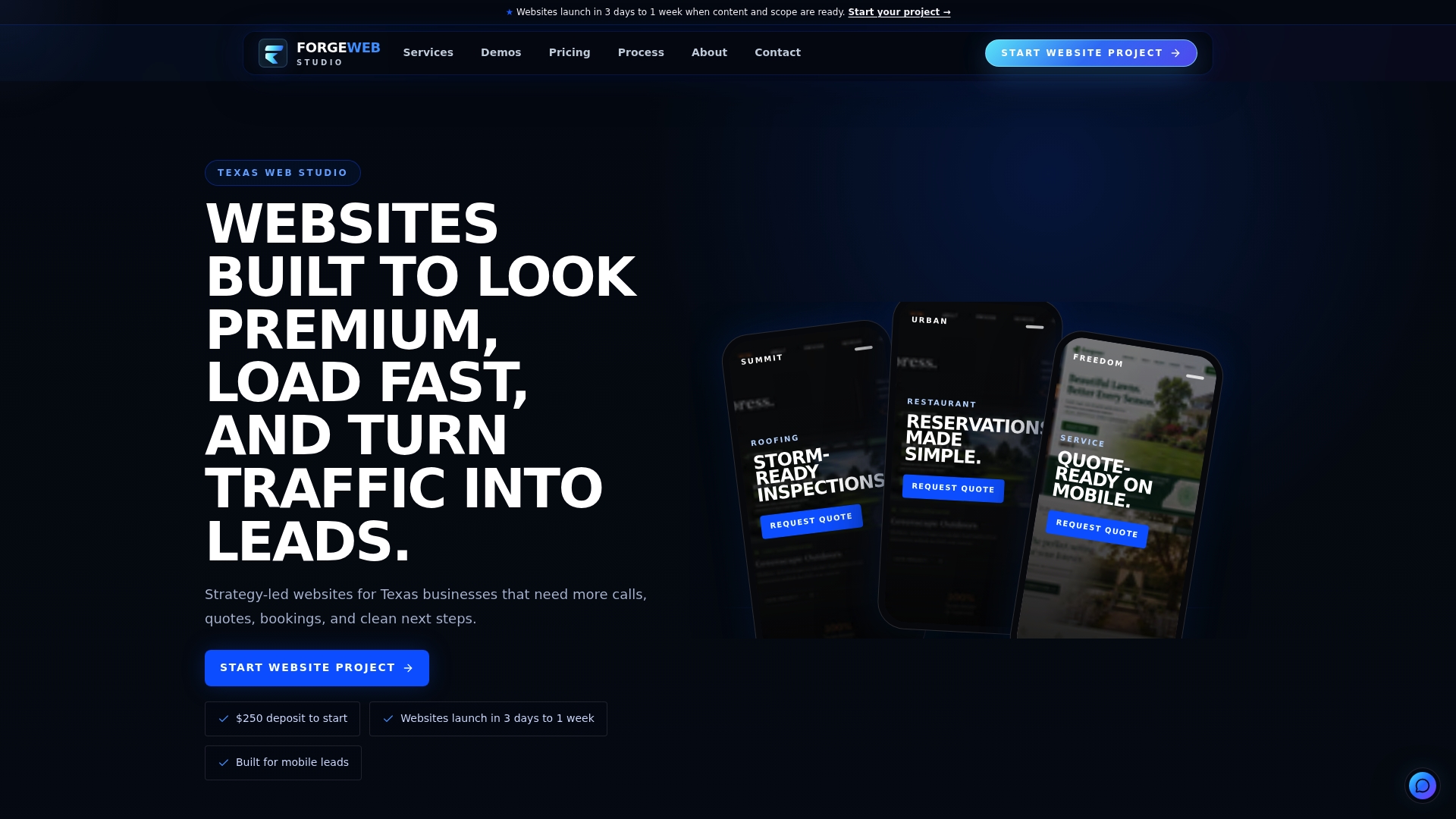
That means fewer rounds of "can we change the headline" after launch, because the content gets tested against what local customers are actually looking for before the layout is locked. If you want a site built this way, check pricing and request a project.
Sources
- Doing content-first design at Defra – part one
- Content-First Design – A List Apart
- Which Comes First? Layout or Content? - NN/g
FAQ
What does content design do?
Content design shapes the words, structure, and flow a product uses to communicate with users, deciding what gets said, in what order, and why, before or alongside the visual interface. It covers everything from microcopy and headlines to form labels and error messages, with the goal of making a product's language as clear as its layout.
Is content design a stressful job?
Like most product and design roles, content design carries deadline pressure and cross-team coordination that can feel demanding at times, but this varies by team, company, and workload rather than being a fixed trait of the job. Teams that adopt content-first practices, testing words early instead of scrambling to rewrite copy right before launch, tend to reduce some of that last-minute pressure.
Is UX at risk of AI?
AI tools are changing parts of the UX workflow, particularly repetitive drafting and layout generation, but they have not replaced the judgment needed to test content and structure against real user comprehension. Content-first practices, which depend on testing actual user understanding, remain a human-led process that tools can support but not fully automate.
Should I learn UI or UX first?
There is no single correct order, since UI (visual interface design) and UX (the overall experience and structure) inform each other, but many practitioners find it easier to learn UX fundamentals, including content and information architecture, before specializing in visual UI skills. Starting with content-first thinking gives you a foundation for structuring information clearly, which makes UI decisions more straightforward later.