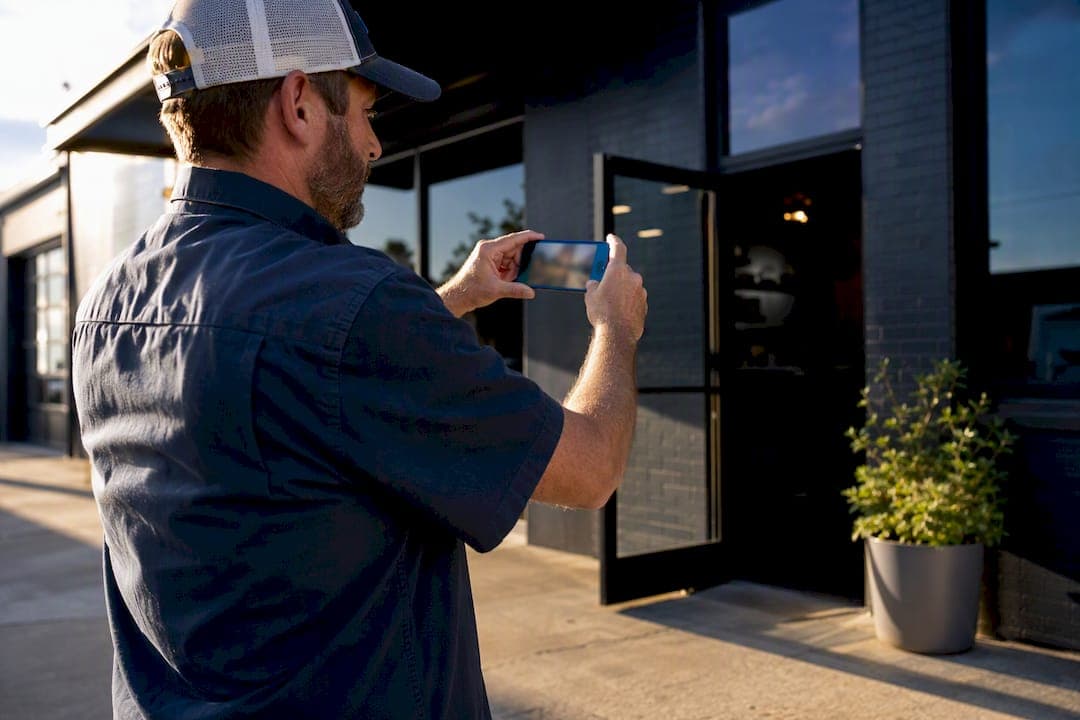
The three moves that decide most "near me" rankings are a fully verified Google Business Profile, consistent contact details paired with a steady flow of reviews, and dedicated city or neighborhood service pages. Each one maps to Google's own local ranking factors: relevance, distance, and prominence. Start today by verifying your Google Business Profile, checking that your address and phone number match everywhere online, and texting five recent customers to ask for a review.
TL;DR:
- Verifying and fully completing your Google Business Profile is essential, as verified profiles generate more visits and rank higher in local search results.
- Building targeted location pages with specific services and localized details, including NAP and landmarks, accelerates ranking speed and relevance in local searches.
- Consistent, recent reviews and a steady review request habit signal ongoing legitimacy, while citation accuracy and NAP consistency across sources improve prominence.
- Technical fixes like adding schema markup with precise geo-coordinates and optimizing your mobile site significantly reduce distance and relevance ambiguities.
- Prioritizing GBP verification, citation correction, and location page development in that order ensures efficient progress, with quick wins from fixing existing setup errors.
Table of Contents
- What Is Near Me SEO, and Why Does GBP Come First?
- How Do You Build Location Pages People Actually Search For?
- Do Reviews Really Affect Where You Rank?
- What Technical Fixes Actually Improve Local Rankings?
- How Do You Build Local Authority Beyond Your Website?
- How Long Does It Take to Rank for "Near Me" Searches?
- What Do Rapid Local SEO Wins Actually Look Like?
- The Real Priority Order Behind "Near Me" Rankings
- Get Your "Near Me" Rankings Built Right the First Time
- Where to Verify These Recommendations
- Sources
What Is Near Me SEO, and Why Does GBP Come First?
Near me SEO is the practice of optimizing a business's online presence so it surfaces when someone searches "near me," whether they type it or Google infers it from a query like "plumber open now." Google has confirmed that local ranking runs on relevance, distance, and prominence, and your Google Business Profile (GBP) is the single input that touches all three at once.
A complete profile tells Google exactly what you do, where you are, and whether people trust you. An incomplete one leaves Google guessing, and Google does not guess in your favor. Shopify's research found that verified profiles generate substantially more visits and show up far more often in local results than unverified ones. That gap alone explains why GBP work should happen before anything else on this list.
Here's the completion checklist that actually moves the needle:
- Verify ownership through postcard, phone, or email confirmation. An unverified listing rarely earns a spot in the local pack.
- Pick your primary category carefully. "Plumber" ranks differently than "Emergency plumber," and Google weighs your primary category heavily.
- List every service you offer, not just the two or three you lead with. Buried services show up in fewer searches.
- Set accurate hours, including holiday and special hours. A "closed" status during business hours kills click-to-call traffic instantly.
- Add attributes like wheelchair accessible, free Wi-Fi, or veteran-owned. These filter into niche searches you'd otherwise miss.
- Upload real photos regularly, not stock images. Profiles with fresh photos tend to earn more engagement and stay active in Google's eyes.
Beyond the static fields, GBP Q&A and Posts let you answer conversational intent directly. Someone searching "is [business] open now near me" often sees your posted hours or a recent Post about weekend availability before they ever click through. Answer common questions in the Q&A section yourself. Nobody has to ask first for you to respond.
Once your profile is live, watch GBP Insights weekly. Track how many people call, request directions, or visit your website directly from the listing. If direction requests spike but calls stay flat, your hours or phone number might be wrong. A full GBP optimization walkthrough is worth bookmarking if you manage multiple locations.
Pro Tip: Post a photo update at least twice a month. Profiles that go dark for months at a time often lose the "recently active" signal that helps them surface in the local pack.
How Do You Build Location Pages People Actually Search For?
Explicit local searches spell out both the service and the place, like "roof repair Austin." Implicit searches drop the location and let Google infer it, like "roof repair near me" typed by someone standing in Austin. Both intents point to the same solution: a page built around a specific service and a specific place, not a page stuffed with the phrase "near me" itself. Google's own guidance treats "near me" as a proximity signal rather than a literal keyword to chase in your copy.
Building a keyword map for this takes three layers:
- List your core services exactly as customers describe them (drain cleaning, water heater installation, emergency leak repair).
- Add modifiers that reflect real search behavior (same-day, 24-hour, licensed, affordable).
- Layer in geography, starting with neighborhoods and suburbs before broader city terms. Neighborhood-level pages tend to rank faster than citywide pages because there's simply less competition fighting for that exact combination.
A strong location page needs more than a city name swapped into a template. Include your NAP (name, address, phone) prominently, your actual hours, an embedded map, and testimonials from customers in that specific area. One tactic that outperforms generic copy: add driving directions from a well-known local landmark, like "two minutes south of the Riverwalk parking garage." That kind of detail signals real local relevance in a way no keyword density ever will.
A city and neighborhood page template built around this structure gives you a repeatable format for expanding into new service areas without starting from scratch each time.
Pro Tip: Never write "near me" into your page copy just to match search volume. Google reads it as a proximity signal from the searcher's device, not a phrase your page needs to contain.
Do Reviews Really Affect Where You Rank?
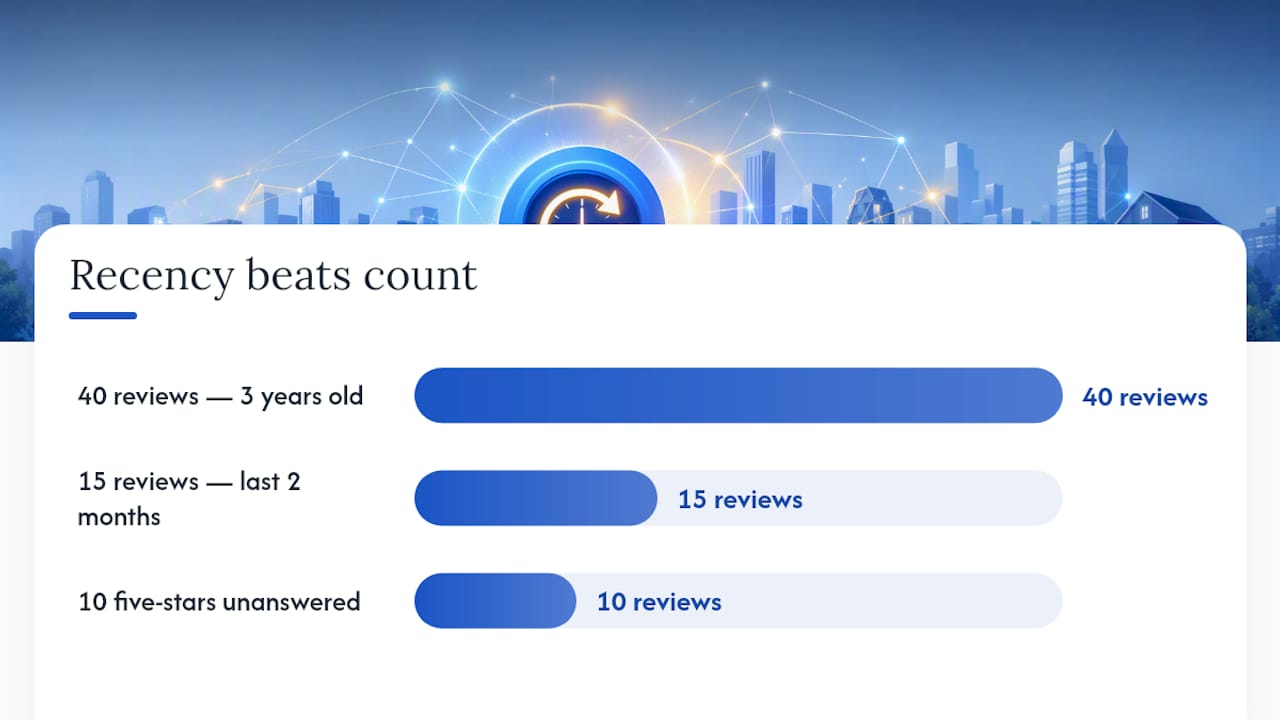
Yes, and recency matters more than raw count. A business with 40 reviews from three years ago often loses to a competitor with 15 reviews earned in the last two months. Review velocity, meaning a steady trickle of new reviews rather than one big push, tends to signal ongoing legitimacy better than a single burst, which is why a "get everyone to review us this month" campaign works less well than a standing habit.
Build a simple review program instead of a one-time push:
- Ask within 24 to 48 hours of service completion, while the experience is fresh.
- Send the request by text, not just email. Text messages get opened faster and convert better into completed reviews.
- Respond to every review within a few days, positive or negative. A thoughtful reply to a bad review often does more for trust than ten five-star ratings sitting unanswered.
- Never argue publicly. Acknowledge the issue, offer to resolve it offline, and move on.
Citations, meaning your business name, address, and phone number listed consistently across directories, work alongside reviews to build prominence. Start with an audit: search your business name and check whether your address matches across your website, GBP, and major directories like Yelp. Third-party platforms and vertical directories add both visibility and trust signals Google can cross-reference. Fix mismatches on the highest-traffic directories first. A priority list of local citation sites makes that triage faster than working alphabetically through every listing site you can find.
What Technical Fixes Actually Improve Local Rankings?
LocalBusiness schema markup is the clearest technical lever you control directly. It's a block of structured data added to your site's code that tells Google exactly what you are, where you're located, and when you're open, without Google having to infer it from scattered page text.
Your JSON-LD should include:
- @type: LocalBusiness (or a more specific subtype like Restaurant or Plumber)
- Address, formatted exactly as it appears on your GBP listing
- Geo coordinates, meaning precise latitude and longitude, not just a city-level estimate
- openingHours, matching your actual posted hours
- Telephone, formatted consistently with every other listing
- areaServed, listing the specific cities or neighborhoods you actually cover
Exact geo coordinates matter more than most site owners realize. A map pin dropped even a few blocks off can throw distance calculations for "near me" queries. Schema with precise geo data reduces that ambiguity and is a low-effort fix compared to content work.
NAP consistency needs to live in two places at minimum: your site footer, so it appears on every page, and a dedicated contact page with a map embed. Mismatches between your footer, your GBP listing, and your citations confuse the local algorithm about which details are correct.
Mobile experience carries its own weight. Most "near me" searches happen on a phone, often through voice, and increasingly with conversational phrasing like "who's open near me right now." Mobile usage data from the Pew Research Center confirms how heavily local search skews toward phones, which makes a few details non-negotiable: a tap-to-call phone number near the top of the page, hours visible without scrolling, and load times fast enough to pass Core Web Vitals. A responsive site built around these priorities tends to convert local clicks at a noticeably higher rate than a desktop-first layout squeezed onto a small screen.
How Do You Build Local Authority Beyond Your Website?
Local link building works differently than the broad backlink strategies you'll read about elsewhere. A single mention from your city's chamber of commerce or a local news write-up carries more weight for "near me" purposes than a generic guest post from an unrelated national site.
A few realistic tactics worth pursuing:
- Sponsor a local event or youth sports team. Most sponsorships come with a website link back to you.
- Pitch local press on a genuine story angle, not a press release nobody will read.
- Write a guest post for a neighborhood blog or community newsletter covering your industry.
- Partner with adjacent businesses for cross-promotion, like a landscaper linking to a fencing company and vice versa.
Before pursuing any directory or partnership, check whether it's actually relevant to your industry or city. A directory with real local traffic and topical relevance helps far more than a generic listing site nobody visits. Skip anything that smells like a paid link scheme or a spammy directory built purely to sell placements. These local links compound with your GBP signals over time. Google increasingly cross-references mentions across the web when calculating prominence, and that same web of mentions is what AI assistants pull from when someone asks a conversational "near me" question through voice search.
How Long Does It Take to Rank for "Near Me" Searches?
Expect GBP fixes and review momentum to show up within weeks. Citation cleanup usually takes a similar timeframe, since most of that work is administrative rather than creative. Location pages and link building take longer, typically three to six months or more, because they depend on Google crawling, indexing, and building trust in new content over time.
Track these metrics from the start:
- GBP Insights: impressions, phone calls, and direction requests
- Local pack and Maps ranking for your priority service and city terms
- Organic traffic to location pages in Google Search Console
- Review velocity: new reviews per month, not just total count
- Mobile conversion metrics in GA4, especially click-to-call events
Google Search Console and GBP Insights together cover most of what you need without paying for a separate rank tracker, though a dedicated Maps rank tracker helps once you're managing more than one location.
Run small experiments rather than overhauling everything at once. Swap your GBP photo set for a month and watch whether engagement shifts. Test a faster review-response cadence for 30 days and compare velocity against the prior month. Small, measurable changes tell you what's actually working before you commit to a bigger rebuild.
What Do Rapid Local SEO Wins Actually Look Like?
The fastest wins tend to come from fixing what's already broken rather than building something new. A GBP profile missing half its service list. A phone number that doesn't match between the website footer and the listing. A mobile page where the call button sits below three scrolls of text nobody reads. Each of those is a same-day fix with an outsized payoff.
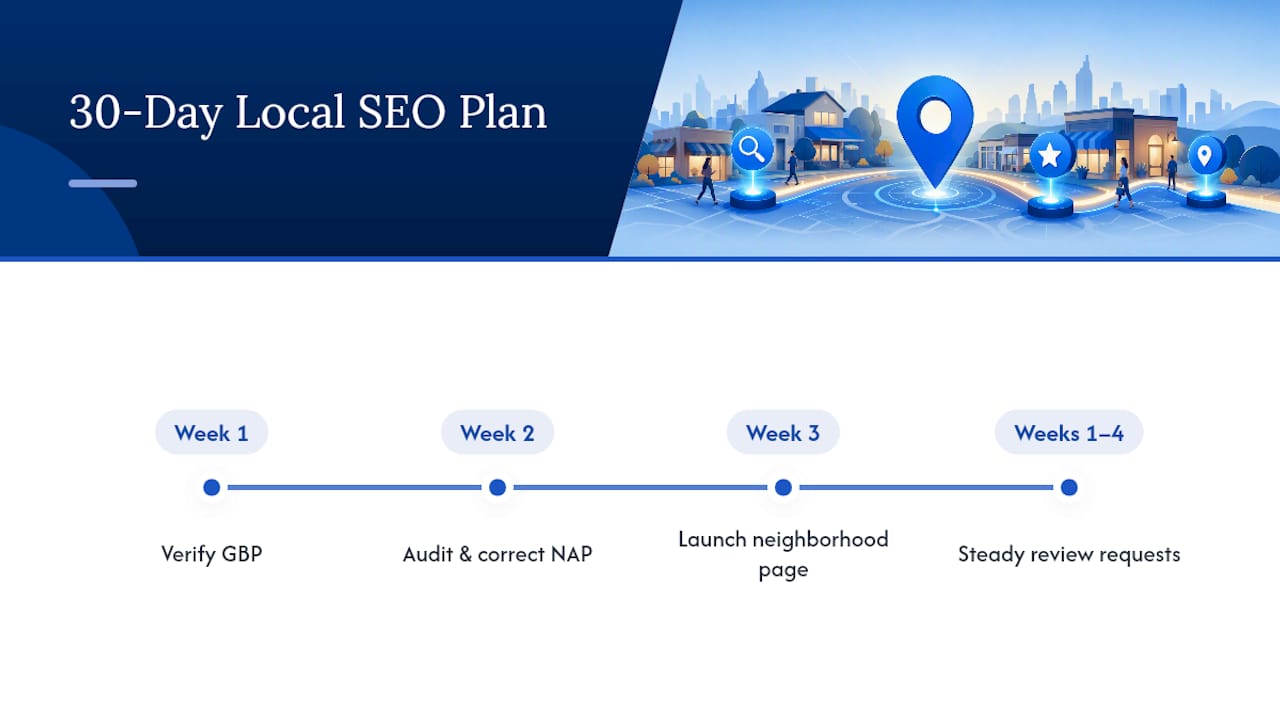
A compact 30-day checklist covers the ground efficiently: verify GBP in week one, audit and correct NAP across your top ten citations in week two, launch one neighborhood service page in week three, and run a steady review-request habit across all four weeks rather than a single blast at the end.
Whether to handle this yourself or bring in help usually comes down to speed and technical comfort. If you're confident editing schema markup and comfortable writing local copy that doesn't read like a template, DIY works fine on a longer timeline. If you need results before your next busy season, or the idea of touching JSON-LD makes you nervous, an agency that specializes in local builds closes that gap faster. A website review checklist is a reasonable first step for figuring out which category you're in.
The Real Priority Order Behind "Near Me" Rankings
Most advice on this topic buries the lead. Writers stack twenty tactics in a list and let readers guess which three actually move the needle. They don't all matter equally, and treating them as equal is why so many small businesses spend months on link building before their Google Business Profile even lists all their services correctly.
The order matters because each layer depends on the one before it. A perfectly built location page on a site with an unverified GBP is wasted effort. A steady review habit means little if your NAP is wrong on half your citations, because Google can't confirm you're the same business it's seeing elsewhere. Fix the foundation first, then build outward.
What's overrated: chasing directory volume for its own sake. Twenty low-quality citations do less than five accurate ones on sites that actually matter in your industry. What's underrated: the plain habit of asking for reviews consistently, week after week, instead of running a single campaign and calling it done.
If you take one thing from this, take the sequence, not the checklist. Verify, correct, build, then earn trust through reviews and links. Skipping ahead rarely saves time. It just means redoing the work later.
— Dylan
Get Your "Near Me" Rankings Built Right the First Time
Fixing your GBP profile, cleaning up citations, and building a location page each take real time, and most business owners are already stretched thin running the business itself. Some web design studios offer mobile-first sites with local SEO structure, clear click-to-call placement, and Google Business integration, potentially launching swiftly within days to a week.
That speed matters because every week a site sits unoptimized is a week of missed calls from people already searching for what you sell. Our local SEO services cover GBP setup and optimization, location page creation, and citation cleanup as a scoped engagement with clear milestones, not an open-ended retainer with vague deliverables. You'll know what's being built and when it launches.
If your current site is missing the technical pieces this article covers, the next step is simple: request a review of your existing setup and get a clear picture of what's holding your local rankings back before committing to a full rebuild.
Where to Verify These Recommendations
For readers who want to check the sourcing directly: Google's own local ranking guidance explains relevance, distance, and prominence in more depth. Schema documents the structured data properties referenced in the technical section. Search Engine Journal and Search Engine Land both cover local SEO tactics in ongoing detail, and Shopify's reporting on GBP verification impact backs the visit and visibility figures cited earlier.
Sources
- How 'near me' results affect retail — Shopify blog
- Tips to improve your local ranking on Google — Google Business Profile Help
- Local keyword research and 'near me' optimization — Search Engine Land guide