This page gives you a curated gallery of restaurant website examples you can study or clone, direct links to template sources like the Webflow showcase and the Table & Fork GitHub template, and a short checklist for picking the right starting point. The single priority to copy from the best sites: a mobile-first layout with a persistent "Book" or "Order" button. Start by browsing the gallery below or jumping to the template category that fits your goal.
TL;DR:
- Use a mobile-first layout with a persistent booking or ordering button accessible on all screen sections to improve user conversions.
- Ensure menu details, hours, and contact information are as real text and structured data, not PDFs or images, to aid search visibility and usability.
- Select a template aligned with your primary goal, testing its mobile functionality, especially the menu and booking or ordering flow, before launch.
- Download templates like Table & Fork for full control or choose platforms like Webflow or Shopify based on design flexibility versus built-in ordering features.
- Consider rapid custom builds if templates fall short, starting from as low as $500, with options for growth and fully tailored websites depending on your needs.
Table of Contents
- 1. Standout restaurant website examples and what to copy from each
- 2. Where to find templates, cloneables, and starter projects
- 3. Design patterns high-performing restaurant sites use
- 4. How to pick a template or example for your restaurant
- 5. What we focus on when building restaurant sites
- Consider a rapid custom build for your restaurant
- FAQ
- Sources
1. Standout restaurant website examples and what to copy from each
Good restaurant sites repeat a few winning moves even when their cuisine, price point, or vibe couldn't be more different. Here are examples worth studying, organized by restaurant type, with one specific element to borrow from each.
- Fine dining showcase sites in the Webflow restaurant and food category lean on full-bleed photography and a single reservation button fixed in the header. Copy the restraint: one clear action, minimal text, and a hero image that sells the atmosphere in one glance.
- Table & Fork, a free Next.js restaurant template on GitHub, uses a real HTML menu instead of a PDF, a live open or closed badge, and built-in structured data. Copy the menu structure and the one-file config that keeps your hours and menu items consistent everywhere they appear, using structured data SEO techniques to help search engines display accurate information.
- Casual neighborhood spots on Webflow often pair a simple top-nav menu link with a map embed on the homepage. Copy the map placement so first-time visitors can find the location without hunting.
- Cafés and coffee shops tend to favor warm, muted color palettes and a short "About" blurb above the fold. Copy the tone: a few sentences in a human voice instead of generic marketing copy.
- Bakeries frequently build around a visual menu grid with prices and photos side by side. Copy the grid layout if your menu is small enough to photograph well.
- Delivery and ordering-first restaurants put the ordering widget directly in the hero, often from a third-party integration, instead of burying it in a separate page. Copy the placement, not necessarily the vendor.
- Reservation-first restaurants repeat the booking CTA in the header, the hero, and the footer so it's never more than one scroll away. Copy the repetition.
- Minimal brochure sites, common among smaller or single-location spots, strip everything down to hours, menu, and contact. Copy the discipline if you don't have the budget for a full build yet.
- Multi-location chains usually add a location-picker near the top of the homepage so the right hours and menu load automatically. Copy the pattern if you operate more than one address.
- Craft bars and gastropubs often use a dark theme with high-contrast text, which works well on mobile but needs careful testing for accessibility contrast ratios.
The common thread: none of these sites make you dig for the menu, the hours, or the way to book a table.
2. Where to find templates, cloneables, and starter projects
Your choice of platform depends on how much control you want versus how fast you need to launch. Each source below fits a different need.
- Webflow showcase: Visual, cloneable designs you can edit without code, good for design-first owners, but publishing on your own domain typically requires a paid Webflow plan.
- ThemeForest and other Envato marketplaces: Paid themes built on WordPress or similar systems, with a wide range of restaurant-specific layouts, though quality and code cleanliness vary by seller.
- Shopify theme store: Best when ordering and payment processing are central to your business, since commerce is built into the platform rather than bolted on.
- GitHub templates, like Table & Fork: Free, code-first, and fully yours to modify, but you'll need a developer or enough comfort with code to deploy and maintain it.
Hosting and licensing follow the same split. A static template like Table & Fork can run free on Cloudflare Pages, Netlify, Vercel, or GitHub Pages once built, while Webflow cloneables generally live inside Webflow's own hosting and subscription. If design speed matters most, clone a Webflow example. If integrated ordering matters most, start with a Shopify theme. If you want full control over performance and structured data, start with a GitHub template.
3. Design patterns high-performing restaurant sites use
A handful of patterns separate restaurant sites that convert from those that just look nice. Treat your homepage as a silent marketer: it has to expose the essentials without making anyone click around for them.
- Mobile-first hero with a persistent CTA. Keep "Book Now" or "Order Now" visible through scroll, not just at the top of the page.
- Real HTML menus, not PDFs. Structure menu sections, dietary badges, and prices as actual page content so they're readable and searchable.
- Hours, map, phone number, and trust signals on the homepage. Don't make visitors leave the homepage to confirm you're open.
- Working reservation or ordering integration, linked directly from the hero and header, not buried three clicks deep.
- Structured data markup for Restaurant, Menu, and OpeningHoursSpecification, which helps search engines display accurate hours and menu details directly in results.
- Optimized images instead of autoplay video, since heavy media slows load times without adding much to conversion.
A Food Delivery and Takeout UX Benchmark evaluating more than 390 UX parameters found that sequential flows (menu, then booking, then confirmation) scored a high mean satisfaction score among participants, reinforcing that low-friction, step-by-step paths outperform cluttered, all-at-once layouts. For more on building that kind of layout, see our guide to mobile-first menu page design.
Pro Tip: Test your own site on a phone with one thumb, no zooming. If you can't find the menu and book a table in under three taps, your visitors can't either.

4. How to pick a template or example for your restaurant
Picking the right starting point comes down to matching the template to your actual goal, not just what looks good in a screenshot.
- Define your primary goal first. Reservation-heavy fine dining fits a Webflow cloneable with a prominent booking button; delivery-heavy spots fit a Shopify theme with ordering built in; discovery-only brochure sites fit a lean code template like Table & Fork.
- Verify the mobile flow before committing. Check that the menu renders as real text (not an image or PDF) and that any reservation or ordering widget actually works on a phone screen, as detailed in our piece on building a reservation page that fills tables.
- Estimate your time-to-launch honestly. A cloneable template can go live in days, a coded template needs developer hours to customize and deploy, and a fully custom build runs on a longer project timeline.
- Run a one-minute mobile test on any candidate: open the site, find the menu, book or order, and confirm the action went through. If any step stalls, cross that template off your list.
5. What we focus on when building restaurant sites
We build restaurant sites around three priorities: mobile clarity, a clear path from browsing to booking, and local search visibility, since most diners search and decide from a phone. Our demo gallery includes industry-specific examples that show these priorities in practice rather than as abstract promises.
— Dylan
Consider a rapid custom build for your restaurant
If editing a template still leaves you short on time or results, we build mobile-first restaurant sites focused on lead flow and local search, usually in days rather than months.
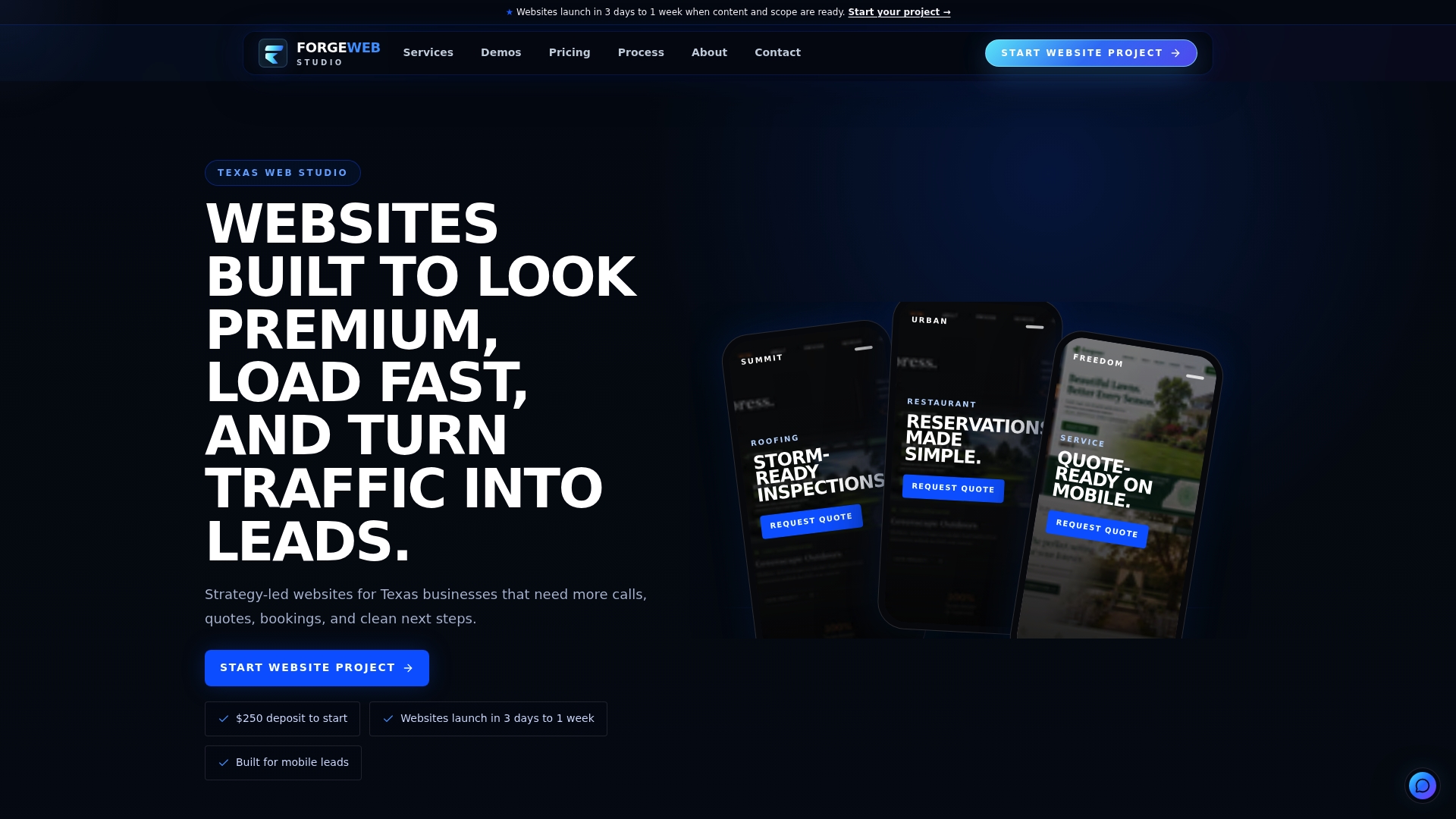
- Starter Website fits a lean brochure-style launch.
- Growth Website adds more pages and lead-generation features.
- Custom Business Website suits restaurants that want a fully tailored build with reservation and ordering integration.
Every project includes direct access to the founder and full ownership of your site and content. See current pricing and packages or browse our restaurant web design page to get started.
FAQ
What are 10 examples of restaurant website types to study?
Strong examples span fine dining, casual dining, cafes, bakeries, delivery-first, reservation-first, minimal brochure sites, multi-location chains, craft bars, and food truck or pop-up sites. Each type emphasizes different priorities, from ordering widgets to simple hours-and-menu pages, so match the example to your own business model rather than copying the flashiest one.
How do I make a website for a restaurant?
Start by choosing a template source that fits your goal: a cloneable Webflow design for visual control, a Shopify theme for integrated ordering, or a free code template like Table & Fork for full customization. From there, add a real HTML menu, hours, contact details, and a persistent booking or ordering button, then test the whole flow on a phone before launch.
What are some good restaurant website templates?
The Table & Fork template on GitHub is a free, production-ready option built with real HTML menus, a reservation form, and structured data already in place. Webflow's food and drink showcase and Shopify's restaurant-focused themes are also solid starting points depending on whether you need visual design flexibility or built-in ordering.
What are some well-known food website examples?
Beyond individual restaurant sites, well-known food-focused sites include large recipe and review platforms, but for restaurant owners specifically, template showcases like Webflow's food and drink category and open-source projects like Table & Fork offer more directly applicable, clonable examples.
How much does a custom restaurant website cost?
Our Starter Website begins at $500 one-off, the Growth Website begins at from 1200 USD one-off, and a fully Custom Business Website begins at from 2500 USD one-off, depending on scope and features like reservation integration.
Sources
- Food Delivery & Takeout UX Benchmark 2026 – Baymard
- haider484991/tablefork-nextjs-restaurant-template