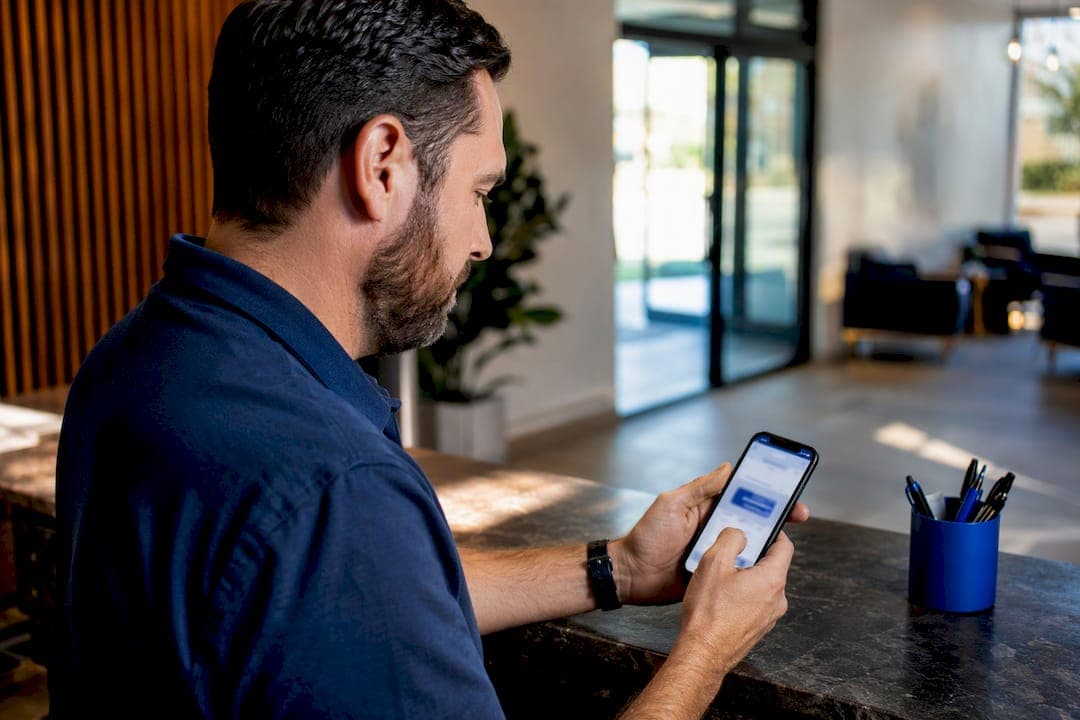
Start with your Google Business Profile and a NAP audit. Those two moves fix the errors that quietly cap your rankings before anything fancier can help. From there, a phased setup works best: audit what you have, fix your foundation, build review and content signals, and then maintain monthly. Most businesses see measurable movement in the local pack within 30 to 90 days once the foundation is clean.
TL;DR:
- Claim and optimize your Google Business Profile early, focusing on categories, photos, and weekly updates to maximize local search visibility.
- Run a comprehensive NAP audit across key directories and fix inconsistencies, prioritizing major platforms like Google, Bing, and Yelp.
- Collect reviews through automated SMS, in-person QR codes, and follow-up emails, maintaining steady momentum with responses within 48 hours.
- Build a website with dedicated local service pages, schema markup, and mobile speed improvements to reinforce your GBP signals and improve rankings.
- Focus on basic foundational fixes before attempting advanced tactics, and aim to complete your local SEO setup within a week for quicker results.
Table of Contents
- Your Local SEO Setup Checklist for the First 30 to 60 Days
- How Do You Claim and Optimize a Google Business Profile?
- How Do You Fix NAP Consistency Across Directories?
- What's a Realistic Review Collection System?
- What Website Elements Support Local Search?
- Which Pages Should You Build for Local Keywords?
- How Do You Build Local Backlinks Without Spam Risk?
- What Should Ongoing Local SEO Maintenance Look Like?
- How Forge Web Studio Approaches a Local SEO Setup
- Where Most Local SEO Setups Go Wrong
- Get Your Local SEO Setup Done in Days, Not Months
- Sources
- FAQ
Your Local SEO Setup Checklist for the First 30 to 60 Days
Local SEO setup fails most often because owners try to do everything at once and finish nothing. Sequence beats effort here. The order below follows the audit, fix, build, maintain framework that most phase-based blueprints recommend, and it front-loads the tasks with the fastest payoff.
- Days 1 to 3: Claim or confirm your Google Business Profile, verify your primary category, and check that your name, address, and phone number match your website exactly.
- Days 4 to 10: Run a full NAP audit across your top 20 citation sources and flag every mismatch in a spreadsheet.
- Days 11 to 20: Fix the priority citations first, then start or resume your Google review requests.
- Days 21 to 35: Add or update location and service pages, install LocalBusiness schema, and check mobile page speed.
- Days 36 to 60: Publish your first local content piece, request two to three local backlinks, and set up a regular maintenance calendar.
Verification timing varies. Postcard verification through Google can take five to fourteen days, while phone or email verification often finishes same day. Don't wait on verification to start your NAP audit. Those two tracks run in parallel.
Pro Tip: Add a "Get more reviews" short link to your GBP dashboard before you do anything else on this list. It takes two minutes and you'll use it for the next three months straight.
How Do You Claim and Optimize a Google Business Profile?
A fully optimized Google Business Profile is the single highest-impact item a local business can control for local search visibility, according to industry local SEO benchmarks. If your GBP listing is thin or wrong, nothing else in this guide will compensate for it.
Start by determining your status. If the listing doesn't exist, create it. If it exists but you don't control it, you'll need to claim it, which usually requires verification. If a former employee or an old agency still holds admin access, you may need to request ownership transfer through Google's support form, which can take one to two weeks to resolve.
Once you're in, work through these fields in order:
- Primary category: Choose the single most accurate category for your core business. This carries more ranking weight than any secondary category you add.
- Secondary categories: Add two to five relevant categories that describe real services you offer, not aspirational ones.
- Services and products: List every service with a short description. Vague listings ("general repair") rank worse than specific ones ("brake pad replacement").
- Business description: Write 250 to 750 characters describing what you do and where you serve, using natural phrasing rather than keyword stacking.
- Hours, attributes, and photos: Keep hours current (holiday hours especially), select accurate attributes, and upload multiple photos, updated quarterly.
- GBP Posts: Publish weekly updates, offers, or events. Idle profiles tend to lose visibility relative to active ones.
Spam and impersonation are common problems in competitive categories. If you spot a competitor with a fake address or keyword-stuffed business name, report it through Google's redressal process rather than trying to out-optimize a listing that's violating guidelines. For a deeper walkthrough of category selection and photo strategy, see this Google Business optimization guide.
How Do You Fix NAP Consistency Across Directories?
NAP stands for name, address, and phone number, and it needs to match exactly everywhere your business appears online. Small discrepancies, like "Main St" on one directory and "Main Street" on another, can hold back local rankings even when everything else looks solid.
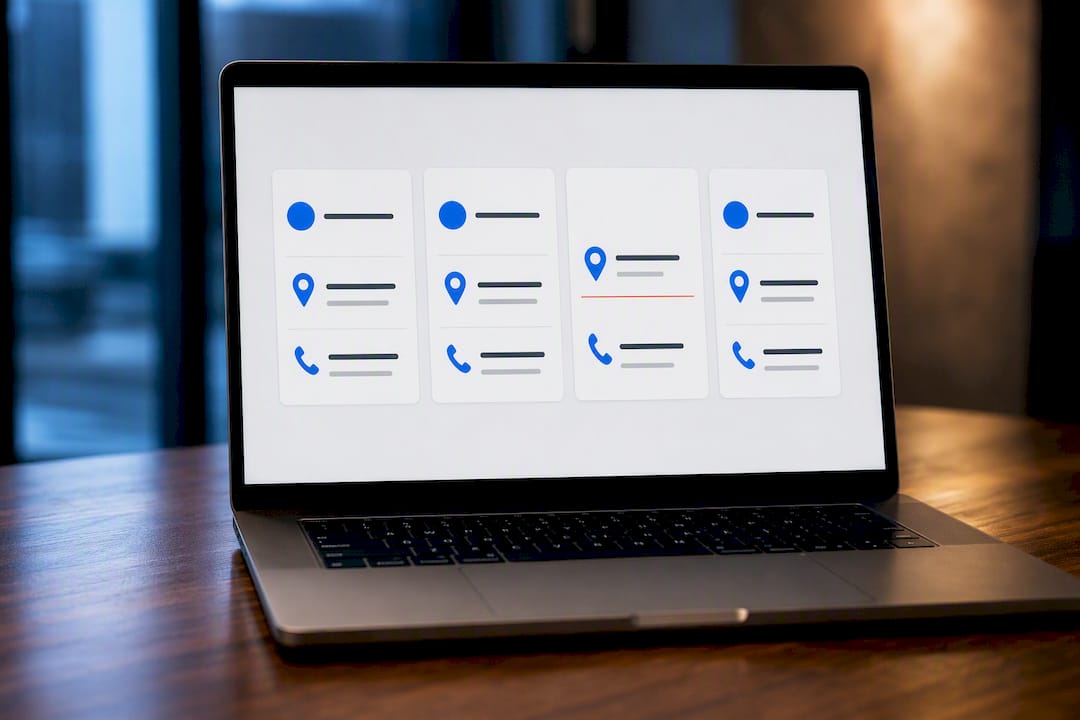
Run your audit by searching your business name plus city in Google, then checking each result against your official NAP format. Log every listing in a spreadsheet with columns for URL, current NAP, correct NAP, and status. Most businesses find 15 to 30 listings worth reviewing.
Prioritize in this order:
- Tier 1 (fix first): Google Business Profile, Bing Places, Apple Maps, Facebook.
- Tier 2 (fix next): Yelp, industry-specific directories (Angi for contractors, Healthgrades for medical, TripAdvisor for hospitality).
- Tier 3 (fix as time allows): Data aggregators like Data Axle and Foursquare, which feed dozens of smaller directories.
The most common formatting mistakes are abbreviation mismatches (Street vs. St.), suite number placement, and old phone numbers left live after a business switched providers. A dedicated NAP audit checklist can speed this up if you're doing it manually. For businesses with dozens of inconsistent listings, paid aggregator submission services save real time. For a shorter list, manual fixes plus this priority citation directory list will get you there without a subscription fee.
What's a Realistic Review Collection System?
Timing determines whether a review request works. Requests sent by text within two hours of service completion convert far better than requests sent days later, and automated SMS asks can reach 25 to 35 percent response rates in many industries, compared to 10 to 20 percent for a manual verbal ask.
Build your system around three channels:
- SMS immediately after service: Send a direct link to your GBP review page, ideally within two hours.
- QR code at checkout or on the invoice: Useful for in-person businesses where a phone number isn't already on file.
- Follow-up email at 48 hours: Catches customers who missed the text.
Aim for a steady velocity rather than a burst. Five to ten new reviews a month sustained over a year beats fifty in one week followed by silence. Respond to every review within 48 hours. Thank positive reviewers by name and mention the service; for negative reviews, acknowledge the issue, apologize once, and move the conversation offline with a phone number or email. Never argue in the reply thread.
Pro Tip: Screenshot your best reviews monthly and turn them into GBP posts. It's free content and it keeps your profile active between review cycles.
What Website Elements Support Local Search?
Your website needs to reinforce what your GBP profile already says, not contradict it. The minimum structure for a local business is a homepage, a contact page, individual service pages, and a testimonials or reviews page. Skipping dedicated service pages is one of the more common gaps that keeps otherwise solid local sites from ranking.
Title tags and H1s should read naturally: "Emergency Plumbing in [City]" beats "Plumber | Plumbing Services | 24/7 Plumbing Company." On-site elements that consistently matter include NAP repeated in the footer of every page, unique service page content (not duplicated across locations), and mobile page speed under three seconds.
LocalBusiness JSON-LD schema helps search engines read your business data reliably instead of guessing from unstructured text. Schema lists the core properties worth implementing:
| Schema field | What it tells search engines |
|---|---|
| name | Your exact business name |
| address | Full postal address, matching your NAP exactly |
| telephone | Primary phone number |
| geo | Latitude and longitude coordinates |
| openingHours | Business hours in structured format |
| sameAs | Links to your social and directory profiles |
| hasOfferCatalog | Structured list of services offered |
Test your markup with Google Search Console or the Rich Results tool before publishing, since Google's structured data policies reject malformed or misleading schema. For copy-ready snippets instead of building JSON-LD from scratch, this local schema markup guide has templates by industry. Run your site through PageSpeed Insights or GTmetrix while you're at it. Mobile speed issues quietly undercut everything else on this list.
Which Pages Should You Build for Local Keywords?
Map your keywords to page types before building anything. A single-location business needs one strong location page plus separate pages for each core service. A multi-location business needs a location page per area served, each with unique content rather than a copy-pasted template with the city name swapped. A service-area business without a storefront should build pages around the areas it serves, clearly framed as service areas rather than physical addresses, to stay within Google's guidelines.
A location page that actually converts needs:
- A local phone number and embedded map with directions
- Photos of the actual location, team, or vehicles, not stock imagery
- Location-specific reviews or testimonials, not a generic pull from all locations
- An FAQ section answering common local questions (parking, service area, appointment availability)
- A clear contact form or booking CTA above the fold
For content that earns links naturally, local pricing guides, "what to expect" service breakdowns, and event or sponsorship recap posts tend to perform better than generic blog filler. A multi-location page playbook covers the mechanics in more depth if you're managing several city pages at once. Consolidate pages only when two locations genuinely serve the same audience with no meaningful service difference. Otherwise, thin duplicate pages do more harm than good.
How Do You Build Local Backlinks Without Spam Risk?
Local backlinks carry more weight than generic ones because they signal geographic relevance search engines can't fake. The reliable sources are your Chamber of Commerce, local news outlets covering small business stories, community organizations, and event sponsorships where you get a mention on the organizer's site.
- Join your Chamber of Commerce and confirm your directory listing links back to your site.
- Sponsor a local event, league, or fundraiser in exchange for a website mention.
- Pitch a local reporter a specific, newsworthy angle, not a generic press release.
- Ask community resource pages to include you if you genuinely fit their list.
Five to ten quality local links usually move the needle more than fifty low-quality directory submissions. Skip link farms, paid link networks, and reciprocal link schemes. Google's algorithms are built to discount exactly that kind of pattern.
What Should Ongoing Local SEO Maintenance Look Like?
Local SEO setup succeeds or stalls based on what happens after month one. Experts describe it as a foundation layer (GBP, NAP, schema) paired with a growth layer of reviews, content, and links. Skip the growth layer and rankings tend to plateau within a few months.
Monthly, you should:
- Publish regular GBP posts and add new photos consistently.
- Respond to every new review and check the Q&A section for unanswered questions.
- Review GBP Insights for views, clicks, calls, and direction requests.
- Check your map pack position for two or three priority keywords.
| What to track | Why it matters |
|---|---|
| GBP views and clicks | Shows profile visibility trend month over month |
| Calls and direction requests | Direct measure of leads generated |
| Map pack position | Tracks competitive standing for target terms |
| Organic local traffic | Confirms website is converting visibility into visits |
Report on these quarterly at minimum, and reassess your whole strategy at the six-month mark. If your in-house time is stretched thin or rankings stall for two consecutive quarters, that's usually the signal to bring in outside help rather than keep guessing.
How Forge Web Studio Approaches a Local SEO Setup
A typical Forge-web-studio local SEO setup pairs a mobile-first website rebuild with GBP optimization and local schema implementation, aimed at fixing lead flow and visibility at the same time rather than treating them as separate projects.
- GBP audit and optimization, including category selection and photo strategy
- Mobile-first site build with clear contact paths and lead capture forms
- LocalBusiness schema implementation matched to your live GBP data
- Service and location page architecture built for the way local searchers actually query
Deciding between doing this yourself and hiring help usually comes down to time and current performance. If your GBP and NAP are already clean and you have a few hours a week, the DIY path in this guide will get you most of the way. If your rankings have stalled for months or your website itself is the bottleneck, a rebuilt foundation tends to move faster than incremental fixes.
Where Most Local SEO Setups Go Wrong
Owners chase advanced tactics, like schema variations or backlink outreach, before fixing the basics that actually cap visibility. A messy GBP category or one mismatched phone number across ten directories does more damage than a missing blog post ever will. Fix the foundation first.
Review velocity and fresh content matter more over time than most owners expect going in. A profile with two reviews from 2024 signals stagnation to both searchers and Google's ranking systems, even if the underlying business is thriving. Consistency beats intensity here.
If your website itself can't convert the traffic your local SEO work generates, a redesign becomes the sensible next move, not another round of citation cleanup.
— Dylan
Get Your Local SEO Setup Done in Days, Not Months
There are practical alternatives to a slow DIY rollout or a retainer agency that takes months to show results. Many local business websites can launch in three days to a week, with GBP optimization, local schema, and mobile-first lead flow integrated from the start instead of added later.
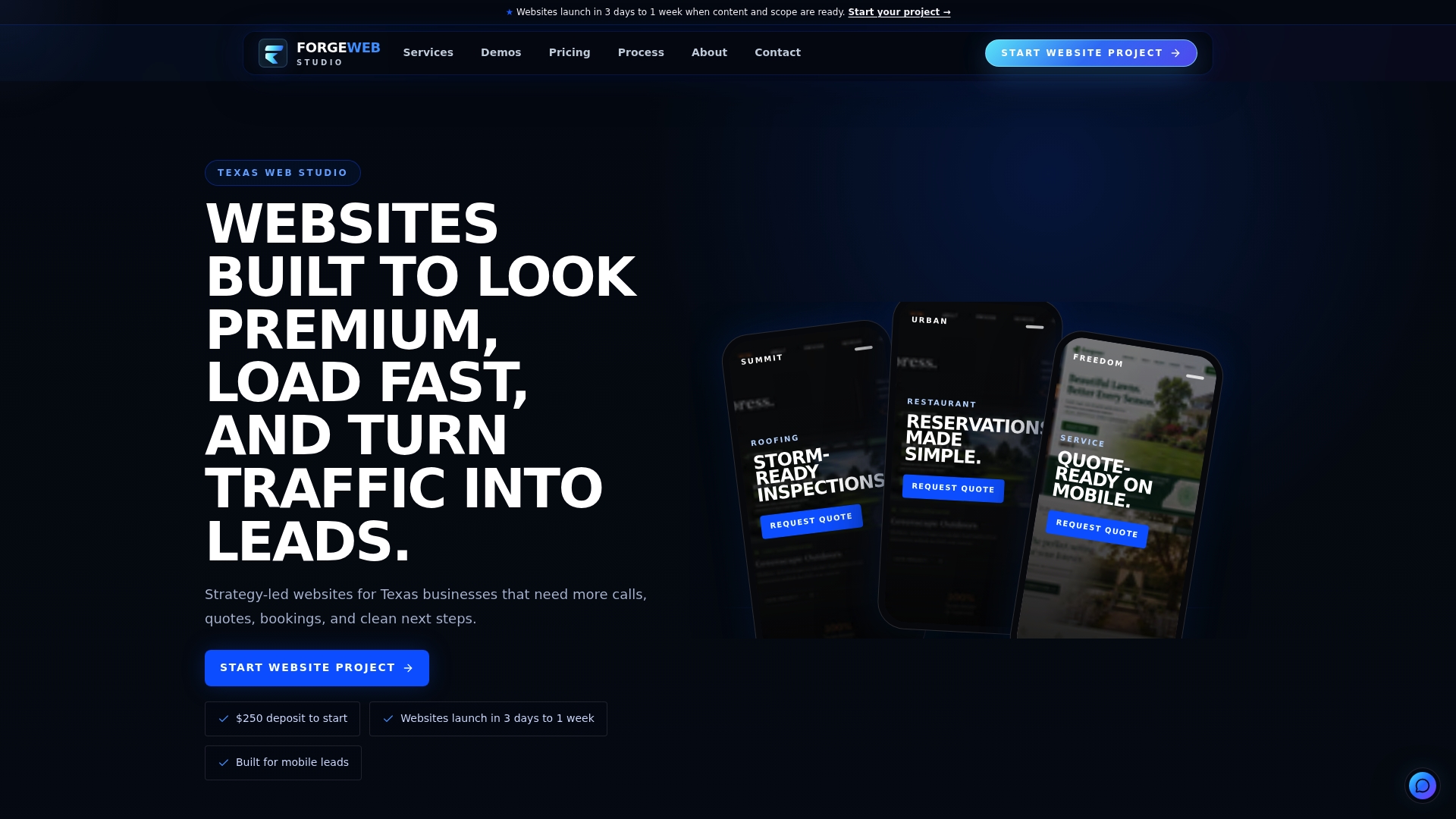
That speed matters because every week your GBP profile sits unoptimized or your site loads slowly on mobile is a week of local searches going to a competitor instead. A cohesive approach bundles foundation work, GBP setup, NAP consistency, schema, and service pages into a single build instead of a scattered checklist managed over months.
If your current site can't support the local SEO setup your business needs, start with our local SEO services to see what a done-for-you setup looks like, or check our responsive website development page if a full rebuild is overdue.
Sources
- How to Build a Local SEO Strategy From Scratch: The Complete 2026 Blueprint | Flento
- What Is Local SEO? Guide to Ranking in Local Search Results
- Schema
- Importance of accurate name address phone number
- Local SEO: The Complete Guide
FAQ
Can I Do Local SEO Myself?
Yes. Claiming your GBP, running a NAP audit, and requesting reviews are all tasks a business owner can handle without technical help, though schema implementation and page architecture go faster with development experience.
How Much Should I Pay for Local SEO?
Costs vary widely by market and scope, from a few hours of DIY time to a monthly retainer or a project-based website and SEO setup; ask any provider exactly what deliverables and timeline are included before committing.
Is SEO Dead Now with AI?
No. AI-driven search results still pull from the same local signals, GBP data, reviews, NAP consistency, and schema, that traditional local SEO setup relies on, so the fundamentals in this guide remain the starting point.
Is Local SEO Free?
The core tasks, GBP setup, NAP fixes, and review requests, cost nothing but time. Paid tools or professional setup services speed things up but aren't required to get the foundation right.